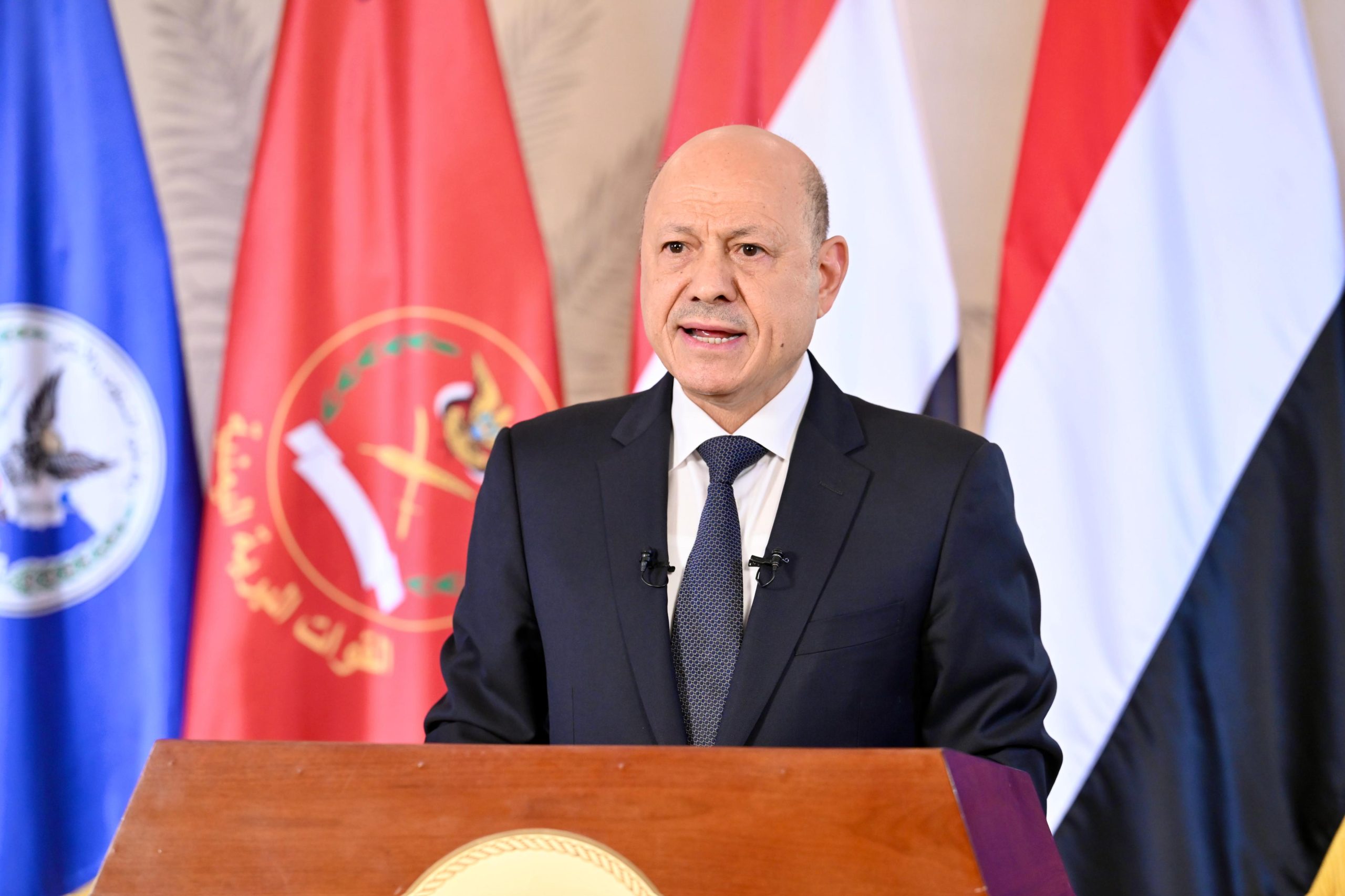
Presidential Leadership Council member Abdullah al-Alimi called on the international community to implement its resolutions, halt the flow of weapons and technology to the Houthi group, and support the Yemeni state’s capabilities and economy. He said restoring the state and securing navigation through Bab al-Mandab were interconnected issues.
In Yemen’s address to the 81st session of the United Nations General Assembly in New York, al-Alimi said Yemenis “are not asking the world to fight their battle on their behalf,” but seek a strategic partnership that supports state institutions and strengthens security, stability and development.
He added that the Yemeni government was capable of ending the threat posed by the group and protecting the country’s ports and territorial waters, according to the state-run Saba news agency.
Al-Alimi warned against relying on Houthi assurances concerning shipping, saying that “not targeting a ship today does not mean being unable to target it tomorrow.”
He said protecting ships alone would not eliminate the threat, and that lasting maritime security in the Red Sea, Bab al-Mandab and the Gulf of Aden required addressing the source of the threat on land and strengthening the Yemeni government’s economic, security and military capabilities.
Al-Alimi accused Iran of supplying the Houthis with weapons, expertise and military technology, and said the group was using maritime security as a means of pressure beyond Yemen.

He also said that the absence of a decisive international response, alongside Iranian support, had enabled the group to expand its influence.
Al-Alimi praised Saudi Arabia’s initiative to establish a multinational defensive maritime coalition and its support for the Yemeni government. He also welcomed what he described as the U.S. administration’s decisive approach to the Houthis.
On peace efforts, he said the government had accepted the roadmap developed with Saudi Arabia and Oman, while the Houthis had responded, according to him, with rejection and escalation in the Red Sea and Bab al-Mandab.
He said his government believed in peace but would not accept weapons remaining outside state control, calling for the Houthis to be judged by their actions.
Al-Alimi stressed that restoring the state would include all Yemenis, including residents of areas under Houthi control, and that the government, in turn, bore responsibility for reform, improving institutional performance and upholding the rule of law.
He also condemned Houthi attacks on Saudi Arabia and the detention of UN staff and humanitarian workers.