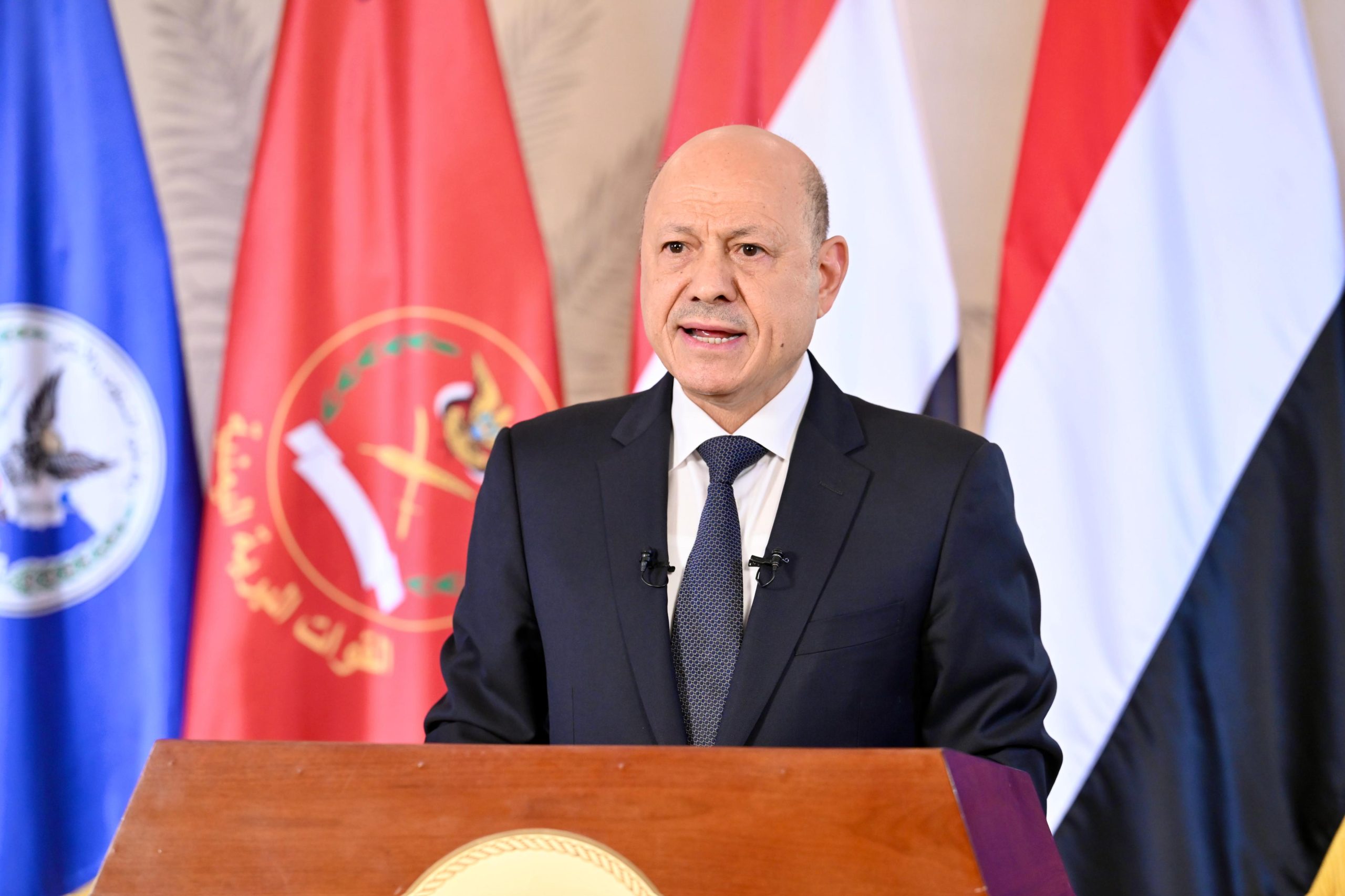
Presidential Leadership Council Chairman Rashad al-Alimi on Wednesday ordered the closure of any border crossing or port operating outside legal frameworks, as well as an end to unlawful interference, exemptions, reductions, and privileges involving ports, border crossings, and customs authorities. The directives are part of comprehensive measures to combat smuggling and undermine the war economy and the Houthis’ sources of funding.
Speaking while chairing part of a meeting of the Supreme Anti-Smuggling Committee in Riyadh, al-Alimi said: “Any border crossing or port operating outside legal frameworks must be closed and immediately brought under the applicable laws and regulations,” according to the state-run Saba news agency.
He stressed the need to halt any interference in the work of ports, border crossings, and customs authorities, saying: “There will be no exemptions outside the law, no exceptional reductions, no privileges for individuals or companies, and no directives that bypass the competent institutions.” He added that state revenues belong to the people and must not be subject to favoritism, influence, or political deals.
Al-Alimi ordered a reassessment of all border crossings and ports that have experienced irregularities in recent months. The review will cover the performance of their directors and the government and security agencies operating there, alongside personnel rotations and the replacement of anyone found to have performed poorly or neglected their duties.

He said no official implicated in smuggling, protecting smugglers, facilitating the passage of their shipments, or obstructing state decisions would enjoy functional or political immunity. He called for legal action against those involved, complicit, or seriously negligent, and for completed case files to be referred to the Public Prosecution without delay.
“The era of tolerating smuggling is over,” al-Alimi said, adding that the state would take the necessary measures to protect legitimate trade and the national private sector and deal firmly with smuggling networks that drain its resources, finance its adversaries, or threaten national security.
He urged the Supreme Anti-Smuggling Committee to expedite the preparation and implementation of a unified list of materials, equipment, and vehicles prohibited from entering Houthi-controlled areas, particularly military and dual-use items.
Al-Alimi also emphasized the need to protect currency, gold, and other metals from practices that drain the country’s resources, harm the national currency and banking sector, and create channels for financing illicit activities. He called for legal measures to halt such activities and track the networks, sources, and platforms promoting them.
At the same time, al-Alimi said anti-smuggling measures must be precise and carefully considered to target smugglers without harming legitimate trade or disrupting food and medicine supplies, money transfers, or citizens’ savings.
Prime Minister Shaya al-Zindani, who chairs the Supreme Anti-Smuggling Committee, said the issue was no longer limited to customs or security enforcement but had become a matter of state directly linked to protecting the national economy and public resources and strengthening security and stability.
He added that the government would provide the relevant authorities with the necessary political and institutional support and would not shield any negligence or leniency in combating smuggling. He described safeguarding state resources as part of the broader struggle to restore state institutions and strengthen their ability to fulfill their responsibilities toward citizens.
The Presidential Leadership Council, chaired by al-Alimi, had previously approved on November 2, 2025, the closure of border crossings and seaports established in violation of the law in Qana in Shabwa governorate, al-Shihr in Hadramout, Nishtun in al-Mahra, and Ras al-Ara in Lahj. The move was part of a package of decisions aimed at regulating public revenues and addressing irregularities at border crossings and ports.