Yemen’s Presidential Leadership Council affirmed its rejection of any Iranian flights to Sana’a International Airport outside the approved legal frameworks, vowing to take political, diplomatic, and military measures to prevent attempts to violate the country’s sovereignty and impose a fait accompli in areas under the control of the Houthi group.
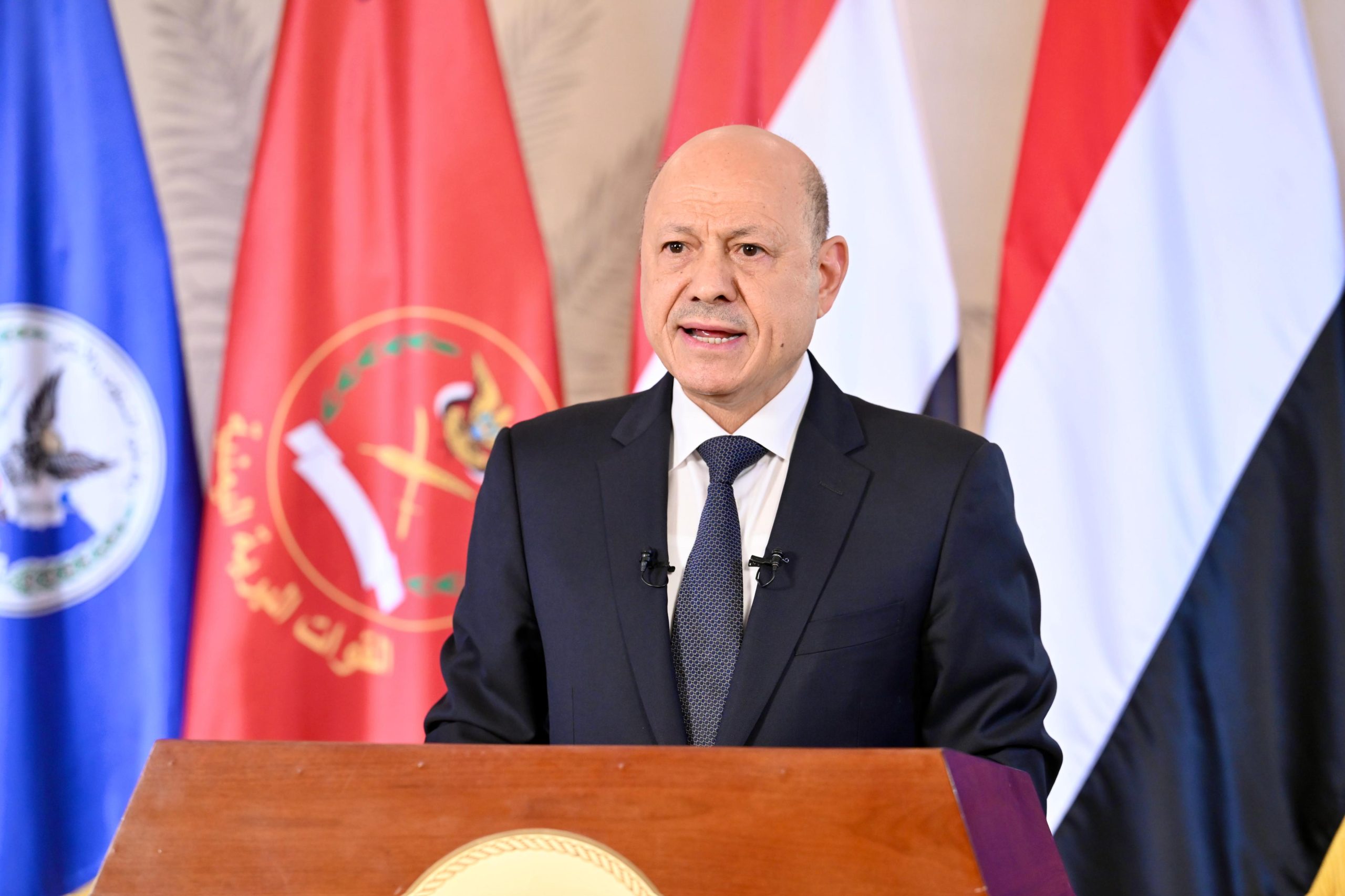
The announcement came during an extraordinary meeting chaired by Council President Rashad al-Alimi and attended by all Council members and Prime Minister Shaya al-Zindani to discuss national and regional developments and proposed policies for addressing them.
According to a statement published by official media, the meeting discussed a request submitted by Iran through the leadership of the Coalition to Support Legitimacy to operate a flight by “Mahan Air” from Tehran to Sana’a. The flight was intended to return Houthi members and leaders who had previously been transported from Sana’a Airport aboard an Iranian flight that arrived on July 3, 2026.
The Council said the previous flight constituted “a blatant violation of the sovereignty of the Republic of Yemen, a challenge to international law, and a breach of UN Security Council resolutions,” stressing that the government and armed forces would take measures permitted under the Constitution and international law to prevent its recurrence.
On July 3, the Houthi group coordinated with Iran’s Islamic Revolutionary Guard Corps to operate a “Mahan Air” flight from Tehran to Sanaa International Airport to transport leaders and members affiliated with the group. The move prompted objections from the Yemeni government, which considered it a departure from the legal frameworks governing air travel.
The Council explained that the government had presented initiatives during the past period to maintain civilian flights from Sana’a Airport through Yemenia Airways, including the operation of regular flights between Sana’a and the Jordanian capital, Amman, to facilitate citizens’ travel and alleviate their humanitarian suffering.

The Council accused the Houthi group of obstructing the operations of the national carrier and seizing four Yemenia Airways aircraft in 2024, noting that the planes were later destroyed as a result of the military escalation witnessed in the country.
It added that, despite this, the government continued to submit proposals for resuming commercial flights through Yemenia Airways, but the group rejected them and insisted on replacing the national carrier with “Mahan Air” to operate flights between Sana’a and Tehran.
The Council renewed Yemenia Airways’ readiness to resume commercial flights from Sana’a Airport to Amman and any other mutually agreed destinations, provided that guarantees are put in place to protect the aircraft and their crews and prevent their seizure or interference in the company’s aviation and administrative operations.
The meeting also discussed the possibility of returning the Houthi members currently in Iran aboard an aircraft chartered by Yemenia Airways, in its capacity as the national carrier, instead of allowing an Iranian airline to operate the flight to Sana’a Airport.
The Council held Iran and the Houthi group responsible for any repercussions resulting from the continuation of Iranian flights, calling on Tehran to halt its interference in Yemeni affairs, respect the country’s sovereignty and territorial integrity, and refrain from using Yemen as an arena for regional conflicts.
These developments come amid an escalating dispute between the Yemeni government and the Houthi group over the management of Sana’a Airport and the entities authorized to operate flights to and from it, amid government concerns that direct flights between Tehran and Sanaa could become a channel for expanding Iranian influence and supporting the group’s political and military capabilities.
Presidential Leadership Council President Rashad al-Alimi had previously said that preliminary information indicated the aircraft was used to transport personnel, experts, and technologies with military and security applications to strengthen the Houthi group’s capabilities, while the group sought to portray the flight as humanitarian in nature.
Al-Alimi considered the aircraft’s arrival a direct extension of Iranian intervention in Yemen, alongside the smuggling of weapons and military technologies, mobilization and recruitment operations, and field movements on a number of fronts.