The outcomes of the Riyadh consultations. What’s Next?
Thursday, April 14, 2022.
The webinar discussed a package of results that emerged from the Yemeni consultations in Riyadh, the mechanism for drawing a road map and evaluating the constitutionality of the presidential declaration, and the challenges!
Speakers:
Saleh Al-Jabwani
Former Yemeni Minister of Transport.
Abdul Samad Elfgeeh
President of the Washington Center for Yemeni Studies
Fatima Abo Alasrar
Non-Resident Fellow and Researcher, Middle East Institute / Political Analyst, Washington Center for Yemeni Studies
Huda Al-Sarari
Yemeni Lawyer and Human Rights Activist, winner of the Martin Ennals Human Rights Award
Saif Al-Muthanna (Moderator)
Director of Public Relations, Washington Center for Yemeni Studies
Alasrar spoke about the importance of the Riyadh consultations, which brought together the various Yemeni components and leaders to pursue peace and security in Yemen. She added that she hoped that the consultations and forming a presidential council would be the beginning of lasting peace and the search for good governance. Abu Al-Asrar considered that the chances of success of Riyadh’s outputs remain dependent on many factors, the most important of which is the implementation of the first and second Riyadh Agreement, especially the security file, as the government is required to support security stability in Aden and the liberated areas. Alasrar urged solving the southern issue at the earliest opportunity in light of the political, military, and security conditions conducive to the return of state institutions, unless the south is a temporary issue, according to her words!
On the other hand, Al-Jabwani described what happened in Riyadh as a farce and a kind of continuous anesthesia carried out by the coalition countries. Al-Jabwani expressed that the talks were about state institutions and not the Yemeni people, so what is happening is a continuation of the partition project in Yemen and the opening of pockets in southern Yemen. Regarding the Presidential Council: He considered it an unconstitutional council, a coup against Yemeni legitimacy, and the beginning of an internal proxy war. Al-Jabwani considered that the coalition resorted to a larger umbrella, the Gulf Cooperation Council, to show the world that there is a Gulf consensus on the Yemeni issue and that the issue is not related to Saudi Arabia and the UAE as much as it is related to the Gulf overall. On his question about the Security Council’s welcoming of the Presidential Council, Al-Jabwani considered the welcome to be a symbol of acceptance of reality, as if it had been written out of shame. He concluded by saying that the battle was with the Houthi militia. He concluded that the militia’s defeat does not need this “glamorousness” more than its need for the alliance and the brothers to be honest and for the intentions of those present to be also sincere, to turn their weapons towards the Houthis, and to support the national army with weapons and money.
Attorney Huda Al-Sarari, who was present at the Consultations, expressed her great satisfaction with these undertakings and the resulting aspirations and changes in the Yemeni scene, and what happened from the formation of the Presidential Council, which she considered to be a good step, praising the role played by the Gulf Cooperation Council and the coalition countries to unite the ranks of Yemenis. Al-Sarari expressed that there is complete satisfaction on the part of the Yemeni parties to go to a peaceful consensus in Yemen, excluding a military solution and denying any pressure exerted by Saudi Arabia on the interlocutors. Al-Sarari praised the women’s presence in the consultations and the prominent role of civil society organizations. On the role of relief in the consultations, she emphasized that she is proud of being part of this path of meetings and future visions regarding the relief field in Yemen, reducing the level of starvation, and cooperating in resolving the file of displaced persons in Yemen and illegal immigrants. She concluded that the Riyadh Consultations were and still are a historic opportunity to stop the war in Yemen and move Yemen from a state of conflict to stability and security.
WCYS President Abdulsamad Elfgeeh spoke about the history of the presidential councils in Yemen, beginning with the era of al-Silal and al-Iryani and ending with what happened in Riyadh, and considered that what the coalition had done from these consultations was an attempt to block the pretexts thrown at him by the United Nations and its organizations, that legitimacy is a group of opposing parties. He added the pros and cons of the council, as he saw that the chance of success is slim based on the military formation in the council, the difficulty of the decisions taken, the affiliations of some members, and the loyalties of some countries. However, Elfgeeh noted that there are advantages to the council, the most important of which is the unification of forces against the Houthi coup and the postponement of the issue of the secession of the south, and considered that the restructuring of the Yemeni government was long overdue. Still, he underscored that the restructuring came under international and regional circumstances that pushed towards this constitutional engineering, considering that the government’s stay in Riyadh will not change Something on the ground, stressing that the return of the government and the Presidential Council to Yemen has become an urgent necessity.
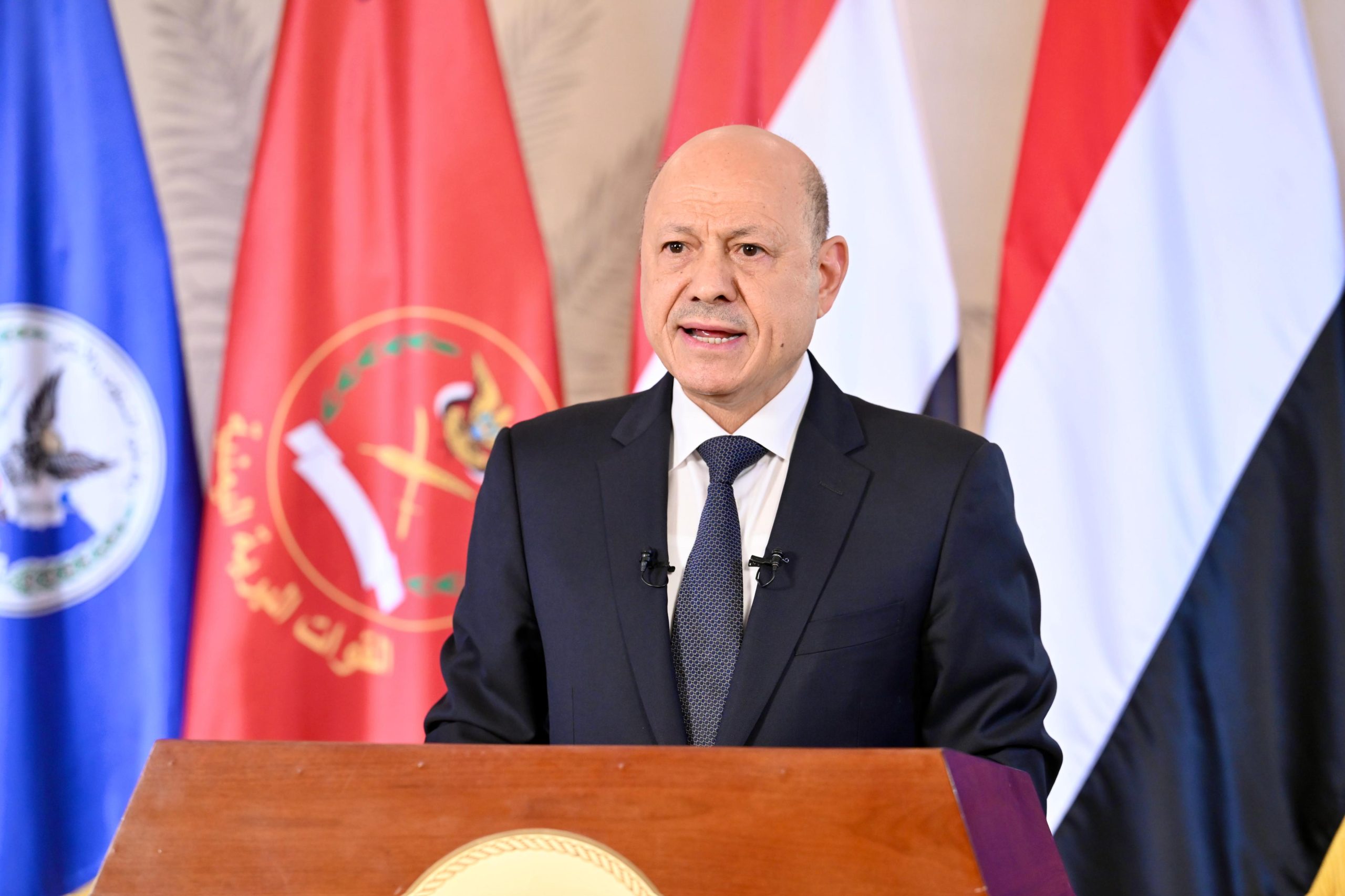
It is noteworthy that the consultations were launched on the 29th of last March until the 7th of April, which resulted in the formation of a presidential council led by Dr. Rashad Al-Alimi. The participants welcomed President Abd Rabbuh Mansour Hadi’s decision to delegate his powers and transfer them to the Presidential Leadership Council, prioritizing the national interest and the interests of the Yemeni people. The final statements praised the efforts made by the GCC countries to unite the Yemeni ranks and their stance, especially the Kingdom of Saudi Arabia. The participants also valued the efforts of the General Secretariat of the Cooperation Council for the Arab States of the Gulf for its initiative and for hosting these Yemeni-Yemeni consultations, which achieved successes that exceeded expectations.
The statement affirmed “the desire and continuation to carry the trust and contribute to laying the foundations for building the Yemeni state, restoring and rebuilding dear Yemen, and restoring the power of the state.”