The Houthis’ announcement of a ban on Saudi-linked maritime traffic prompts Yemen’s National Defense Council to approve military and security measures, while Al-Alimi announces the resumption of oil exports and the Coalition begins protecting vessels in Bab al-Mandab
The escalation between the Houthi group, the Yemeni government and Saudi Arabia has entered a new phase following the group’s announcement of a ban on maritime traffic linked to the Kingdom and its threat to respond to any Saudi move with what it described as a “comprehensive and severe escalation,” in a step that threatens to widen the confrontation and endanger shipping in the Red Sea and the Bab al-Mandab Strait.
The Houthi announcement came on Monday in a statement accusing Saudi Arabia of imposing a blockade on Yemen. The group said the maritime ban would take effect immediately under what it called the “blockade for blockade” equation. It also called on its supporters to continue general mobilization, reinforce the front lines with fighters and prepare for various scenarios.

The threat triggered a series of simultaneous moves by the Yemeni government, Saudi Arabia and the Coalition Command, including raising military and security readiness and approving measures to protect vessels and maritime routes. The government also announced efforts to resume oil production and exports, which had been suspended as a result of Houthi attacks on export terminals.
Government Action and Military Readiness
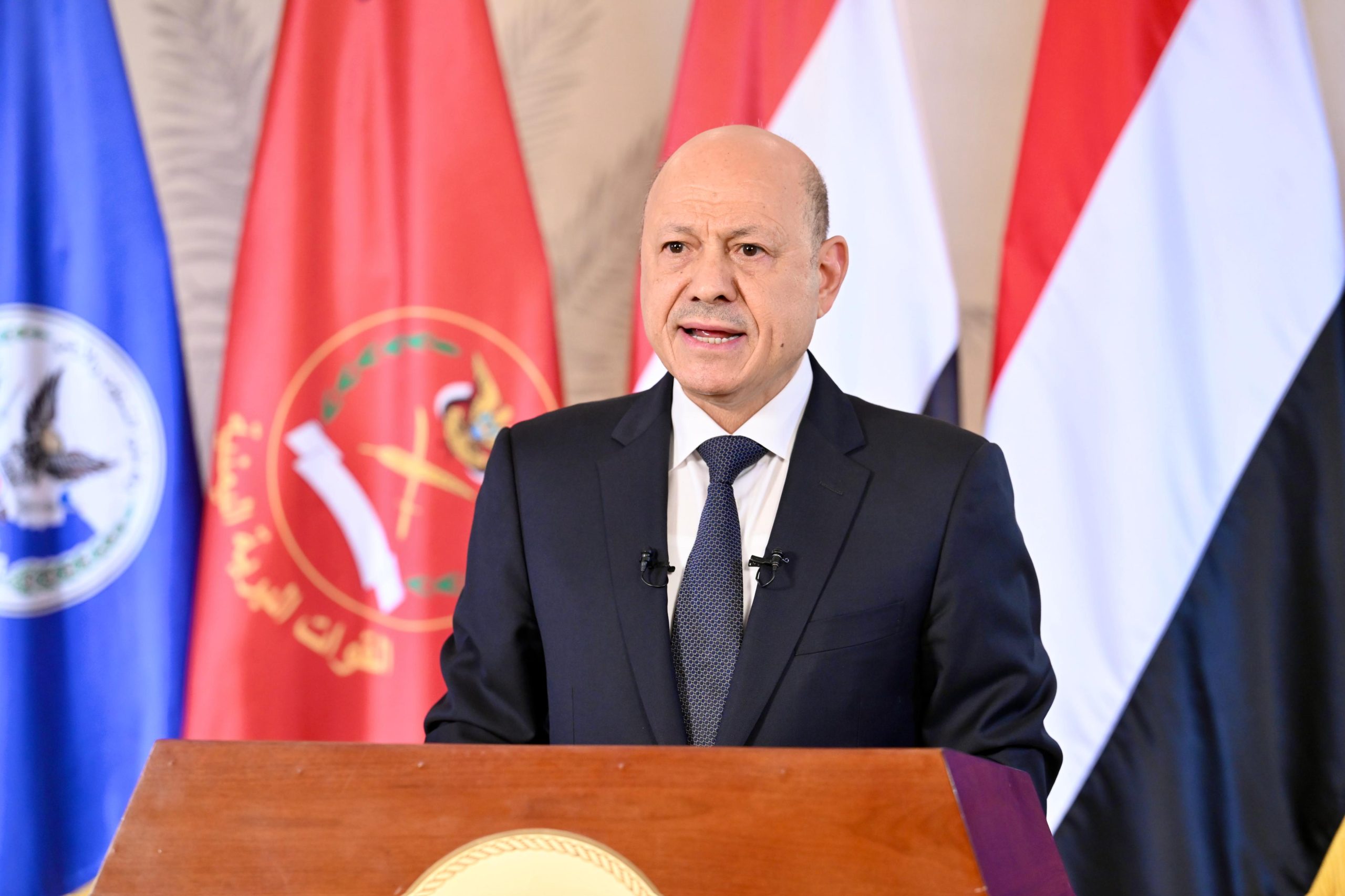
In an address to the Yemeni people, Presidential Leadership Council Chairman Rashad Al-Alimi called on Yemenis from all segments of society to rally around the state project and support the armed forces and security services in the battle to restore state institutions and end the Houthi group’s coup.
Al-Alimi said the suffering of Yemenis was not the result of an “alleged blockade,” but rather the consequence of a project built on war and the exploitation of citizens’ suffering. He accused the group of rejecting humanitarian initiatives and efforts to operate Sana’a Airport, while attempting to impose Iranian flights outside the authority and sovereignty of the state.
The president warned residents of Houthi-controlled areas against sending their sons to the battlefronts and called on political, tribal and community forces to rally around the armed forces, military formations and security services to restore state institutions and protect the republican system and national sovereignty.

Al-Alimi announced that work would begin on Monday to resume oil exports “by all means” and direct the revenues toward paying public-sector salaries, improving services and supporting economic stability. He stressed that the country’s resources must serve Yemenis rather than remain hostage to threats and blackmail.
In this context, the National Defense Council held an emergency meeting chaired by Al-Alimi and attended by members of the Presidential Leadership Council, the heads of the legislative and executive authorities, and a number of military and security officials.
The council approved a package of military, security, economic and administrative measures to confront various scenarios. It also discussed the readiness of the armed forces and military formations to respond to the Houthi escalation, as well as coordinated measures to resume oil exports and allocate the revenues to salaries and public services.
For his part, Defense Minister Lieutenant General Taher Al-Aqili said the armed forces, in all their formations, were at the highest levels of combat and morale readiness. He affirmed their preparedness to protect Yemen’s resources and sovereignty on land, at sea and in the air, and called on residents of Houthi-controlled areas not to allow their sons to be recruited into the fighting.
Saudi Arabia Condemns Houthi Threats
For its part, the Saudi Ministry of Foreign Affairs condemned the Houthi threats and the ban on maritime traffic linked to the Kingdom, rejecting accusations that Riyadh was imposing a blockade on the Yemeni people.
The ministry said Saudi Arabia had worked in cooperation with the Yemeni government to alleviate citizens’ suffering by supporting the state budget, supplying petroleum products to operate power plants and implementing development projects.
It said the ports of Hodeidah, Saleef and Ras Isa, which are under Houthi control, received more than 300 vessels carrying food, goods, fuel and construction materials during the first half of 2026. It stressed that the imposed restrictions were limited to preventing the smuggling of weapons and ammunition in accordance with United Nations Security Council Resolution 2216.
The Saudi Foreign Ministry held the Houthis responsible for worsening the economic and humanitarian situation, noting that the group targeted oil export ports in October 2022, depriving the government of a source that accounted for nearly 60 percent of its revenues and directly affecting its ability to pay salaries and provide services.
It also accused the group of seizing four aircraft belonging to Yemenia Airways and rejecting initiatives aimed at resuming flights from Sana’a Airport, including the latest Jordanian initiative, in addition to targeting commercial vessels and dragging Yemen into regional conflicts.
Saudi Arabia affirmed that it would take the necessary measures to protect its vessels in accordance with international law and the United Nations Convention on the Law of the Sea. It called on the international community to implement Security Council resolutions related to Yemen and freedom of navigation in the Red Sea.
Coalition Begins Protecting Vessels
In a field development, the Coalition’s Joint Forces Command announced the start of operational measures to protect vessels belonging to Coalition countries while passing through the Bab al-Mandab Strait.
Coalition spokesman Major General Turki Al-Maliki said the Houthi threats against vessels constituted a clear violation of international law and amounted to acts of maritime piracy. He affirmed that the Coalition would respond to the sources of the threat “with full firmness and force.”

Al-Maliki denied claims that Yemeni ports and airports had been closed, citing the arrival of more than 300 vessels at the ports of Hodeidah, Saleef and Ras Isa during the first six months of this year. He held the Houthis responsible for the suspension of flights from Sana’a Airport, the destruction of Yemenia Airways aircraft and the rejection of initiatives to resume flights.
The Yemeni Ministry of Foreign Affairs welcomed the Saudi position, affirming the government’s support for the measures taken by the Kingdom to protect its sovereignty, security, vessels and waterways. It called on the international community to confront Houthi threats to regional and international security and freedom of navigation in the Red Sea and Bab al-Mandab.
Shifting the Crisis to the Red Sea
The sequence of events indicates an attempt by the Houthis to shift the crisis from the dispute over flights and sovereignty over Yemen’s airports and airspace to the maritime arena, while using claims of a “blockade” as political cover to justify military escalation.
In contrast, the Yemeni government is seeking to address the threat through two parallel tracks. The first is military and security-related, based on raising readiness and protecting maritime routes, while the second is economic, through restoring oil exports and securing financial resources to pay salaries and improve services.
The Saudi response and the Coalition’s announcement that it would protect vessels in Bab al-Mandab also reflect a shift from political and media responses to operational measures that could increase the likelihood of a direct confrontation if the Houthi group carries out its threats and targets vessels linked to Saudi Arabia or Coalition countries.
This escalation once again places the Red Sea and Bab al-Mandab at the heart of the Yemeni crisis and threatens to expand the conflict from an internal confrontation into a regional crisis affecting international maritime security, supply chains, trade and energy flows, at a time when international action is increasingly needed to prevent maritime routes from being used as a means of blackmail or a tool to prolong the war.