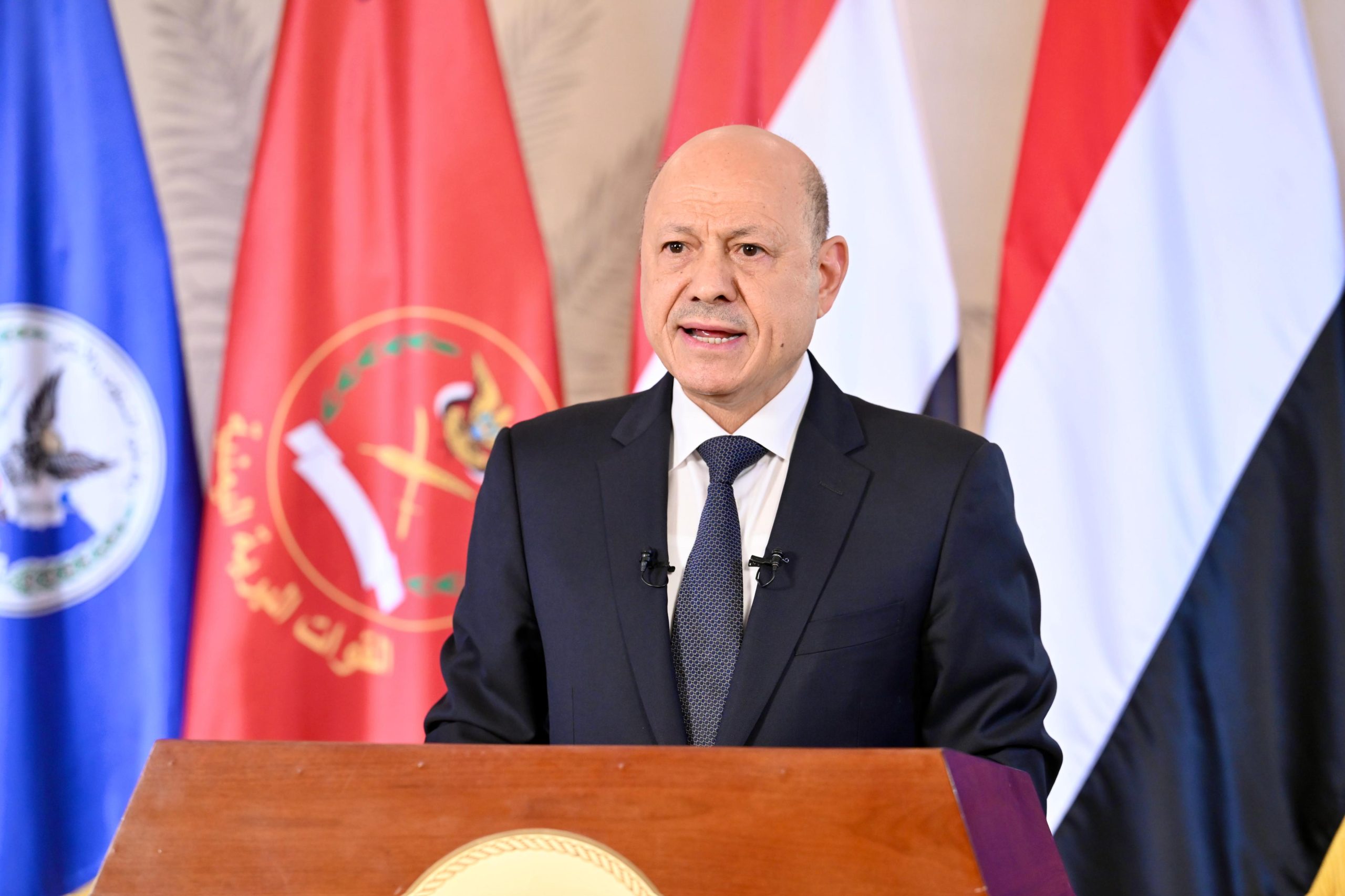
Presidential Leadership Council member Abdullah al-Alimi held talks in the British capital, London, with UK Minister for the Armed Forces Louise Sandher-Jones on expanding defense and security cooperation and supporting the capabilities of Yemeni government forces, amid escalating threats by the Houthi group to international shipping in the Red Sea and Bab al-Mandab.
The government-run “Saba” news agency said the meeting, attended by Yemen’s Ambassador to the United Kingdom Yassin Saeed Noman, discussed the possibility of expanding security and military support programs for the Yemeni government, particularly in the areas of training, qualification and capacity-building.
The talks focused on enhancing the readiness of the armed forces and security agencies to protect borders, ports of entry and maritime corridors, as well as discussing political and military developments in Yemen and the Iranian-backed Houthi threats to regional security and international shipping.
Al-Alimi said the United Kingdom’s designation of Iran’s Islamic Revolutionary Guard Corps as a terrorist organization represents “an important step that will have a direct impact on restricting the Iranian regime’s room for maneuver and that of its proxies, foremost among them the Houthi militia,” while limiting their ability to receive experts, equipment and military support.
He added that the move strengthens efforts aimed at protecting regional and international security, calling for the Houthi group to be designated as a terrorist organization.

Al-Alimi noted that the landing of an Iranian aircraft at Sana’a Airport last week, followed by the operation of a second flight to Hodeidah Airport after it failed to land in Sana’a, represented an attempt to impose a fait accompli outside the sovereignty of the Yemeni state.
He said the two flights were intended to establish an illegal route for transporting experts, equipment and weapons to the Houthi group, posing a threat to the security of the Red Sea, Bab al-Mandab and international shipping.
He said the Yemeni government had presented alternatives for operating flights from Sana’a Airport to agreed destinations through the national carrier, “Yemenia Airways,” in a manner that ensures services are provided to citizens without discrimination.
He accused the Houthi group of rejecting these solutions and insisting on operating Sana’a Airport outside the state’s legal and sovereign frameworks, while using its flights to serve the group’s leaders and their families.
Al-Alimi held the Houthi group and the Iranian regime responsible for the escalation and its consequences, stressing that the government would take the political, diplomatic, legal and military measures permitted under the constitution and international law to protect the country’s airspace and ports of entry and prevent the recurrence of such flights.
The meeting also addressed the peace process in Yemen. Al-Alimi said the government had engaged in political initiatives proposed since 2015, while the Houthi group continued to undermine peace efforts and exploit periods of de-escalation to rearm and develop its military capabilities.
He added that the group had rejected the Saudi-backed roadmap in service of the Iranian regime’s agenda and its expansionist project in the region.
For her part, the UK Minister for the Armed Forces reaffirmed her country’s continued support for the Presidential Leadership Council and the Yemeni government, as well as its commitment to strengthening cooperation between the two countries in the security and military fields and confronting threats targeting international shipping in the Red Sea and Bab al-Mandab.