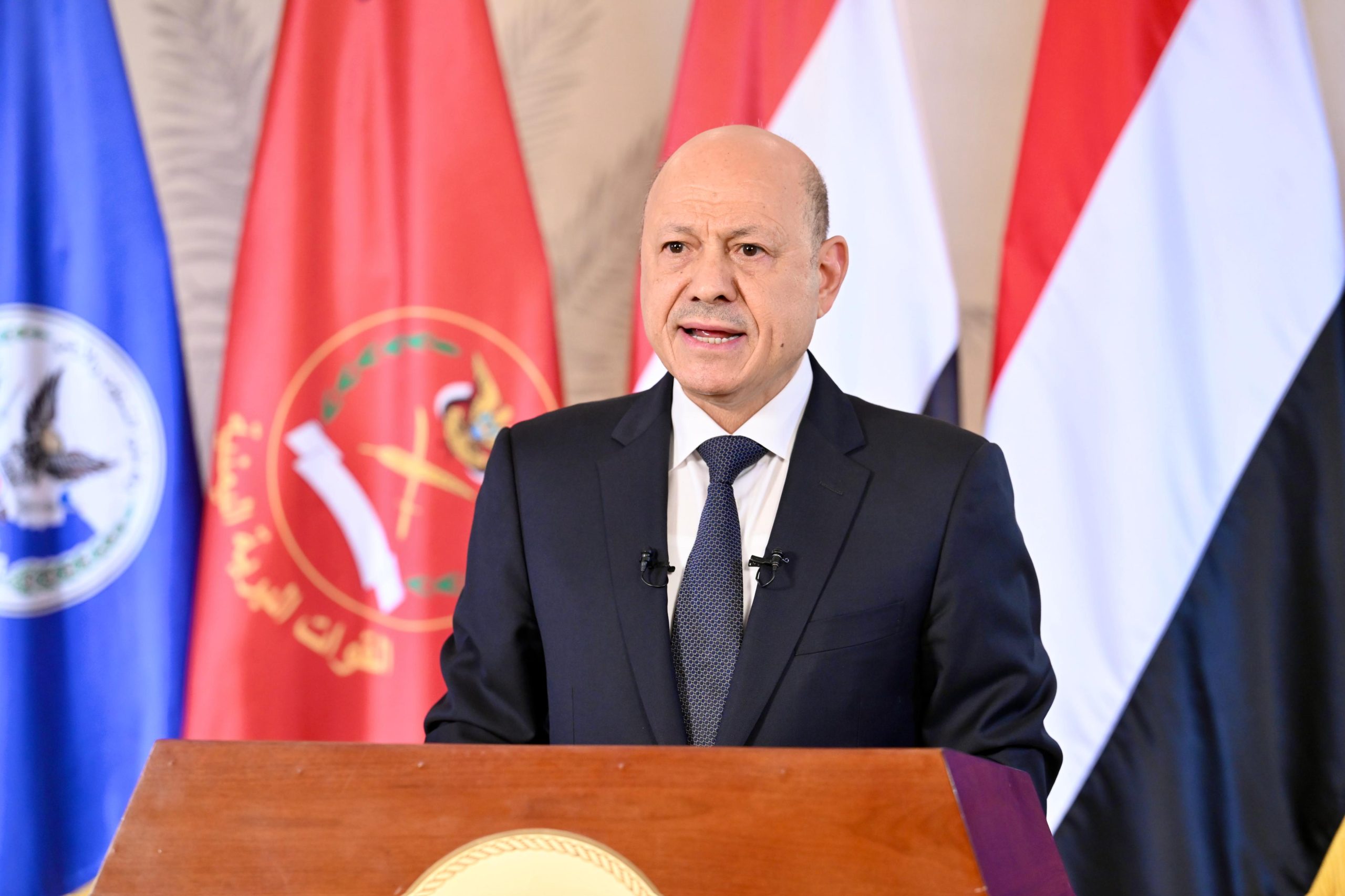
Dr. Abdullah Al-Alimi, a member of Yemen’s Presidential Leadership Council, has signaled a possible return to military action against the Houthi group if war is imposed once again, stressing that the government will continue pursuing political and diplomatic means until the last moment but remains prepared to act militarily to protect Yemen’s sovereignty and restore state institutions.
In an interview with Al Hadath television, Al-Alimi said the Yemeni government would “wield the sword of peace until the very last moment,” adding: “If the militia seeks to impose war once again, we are ready to protect the country’s sovereignty, security and stability, and to alleviate the suffering of the Yemeni people.”
He said the government would employ “all political, diplomatic and military means” to prevent any violation of Yemeni sovereignty, noting that developments involving Sana’a Airport and Iranian flights were no longer merely a matter of civil aviation but had become part of a regional political and military conflict in which airports and civilian facilities were being used to serve foreign agendas.
Military Readiness to Restore State Institutions
Al-Alimi said the Presidential Leadership Council and the government currently have a genuine opportunity to restore state institutions, citing the council’s unity, unified military operations, the presence of an effective government, and ongoing reforms aimed at addressing the current situation.
He said the government had called for a United Nations Security Council session to discuss Iranian interference and violations of Yemeni sovereignty, predicting a clear international stance toward what he described as “blatant interference” in Yemen.
“We will wield the sword of peace until the very last moment, but after that, we are ready for military action to prevent the suffering of the Yemeni people from being turned into a bargaining chip and used to serve agendas outside Yemen,” he added.
Al-Alimi linked the possibility of renewed military confrontation to the Houthis’ continued exploitation of humanitarian, economic and political issues to secure private gains and serve Iranian interests. He said the government was still extending its hand for peace but retained the ability to confront any intervention that undermined the country’s sovereignty or compounded the suffering of Yemenis.
Dispute Over Iranian Flights
Al-Alimi’s remarks came amid a dispute over the Houthis’ insistence on operating flights by Iran’s Mahan Air to and from Sana’a Airport instead of running civilian flights through Yemenia Airways.
He said the arrival of an Iranian aircraft at Sana’a Airport on July 3 constituted “a breach of Yemeni sovereignty,” arguing that the Houthis’ insistence on using the Iranian airline reflected the group’s deepening ties to the Iranian project.
He added that Iran had been interfering in Yemen for years and that the Houthis had “demonstrated close ties to the Iranian axis.” He accused the group of endangering Yemeni interests and national resources because of its relationship with Tehran.
Al-Alimi said the government had taken the initiative to operate direct flights between Sana’a and the Jordanian capital, Amman, through Yemenia Airways to alleviate the suffering of citizens. However, the Houthi group rejected the proposal and insisted on operating flights through the Iranian airline.
He said the issue was not driven by humanitarian considerations, explaining that the Iranian flight was intended to return Houthi members who were in Tehran and that the group had transformed the matter into a political crisis linked to its factional interests and foreign relations.

Guarantees for Resuming Flights
Al-Alimi reaffirmed the government’s readiness to resume commercial and civilian flights from Sana’a Airport, provided that genuine guarantees were secured to protect Yemenia Airways aircraft and crews and prevent Houthi interference in the company’s operations and security and administrative procedures.
He said the government was responsible for Yemenis in all governorates and sought to use air travel to serve them without interference in the management of the national carrier or the seizure of its revenues.
He noted that the Houthis had detained four Yemenia Airways aircraft on June 25, 2024, following the end of the Hajj season, and kept them outside the company’s control before the aircraft were later targeted during the escalation of the regional conflict in May 2025.
Al-Alimi accused the group of seizing the aircraft’s revenues and obstructing the national carrier, saying the Houthis were not handling the issue from a humanitarian perspective but were seeking to take control of the company and replace it with Iran’s Mahan Air.
Fragile Peace Carrying the Seeds of Renewed Conflict
Discussing the future of the political process, Al-Alimi stressed that any peace agreement that failed to restore government control over state institutions, including Sana’a Airport and other airports, and did not guarantee the state’s exclusive control over arms would remain “a fragile peace” carrying the seeds of renewed conflict.
He said the government faced two options: “Either we move toward an honorable peace based on restoring state institutions, or we pursue clear military pressure against those who draw strength from foreign powers.”
He explained that the peace sought by the government was based on returning institutions to the legitimate state, restoring its monopoly over arms, and integrating the Houthis into the political process as a political component that refrains from using armed force.
Al-Alimi said the government had participated in negotiation rounds since 2015, including talks in Switzerland, Geneva, Kuwait, Stockholm and Dhahran al-Janoub, in addition to the roadmap proposed in 2023.
He accused the Houthis of using negotiation rounds to reposition, rearm and reorganize their ranks rather than reach a lasting agreement, adding that the group rejected the roadmap and subsequently escalated its activities beyond Yemen’s borders.
Al-Alimi said the Houthi threat was no longer confined to Yemen but had become a regional and international danger, particularly through attacks on international shipping in the Red Sea and Bab al-Mandab. He warned against allowing the Bab al-Mandab and Strait of Hormuz waterways to become subject to regional blackmail.
He stressed that the Yemeni state must regain control over security, military and political decision-making, protect the country’s coastline, prevent smuggling, administer its institutions, and retain sole authority over decisions related to war, peace and foreign relations.
Obstruction of the Prisoner Exchange Deal
Al-Alimi also addressed the postponement of the prisoner and detainee exchange deal, saying the Houthis had prevented International Committee of the Red Cross aircraft from reaching Sana’a and had requested that implementation of the agreement be delayed for several weeks.
He described the move as an extension of the group’s policy of procrastination and evasion of agreements, calling on the United Nations, the UN special envoy and the International Committee of the Red Cross to adopt a clear position and pressure the Houthis to implement what had been agreed.
He said obstructing the deal would increase the humanitarian suffering of thousands of detainees, abductees and their families, noting that the Houthis were holding politicians, journalists, media workers, civilians and writers and using their cases as leverage in political bargaining.
Al-Alimi cited the case of politician Mohammed Qahtan, who was forcibly disappeared for more than ten years before the group recently presented a body it claimed belonged to him. He described the case as an example of the humanitarian suffering caused by Houthi practices.
He reaffirmed the government’s commitment to the principle of “all for all,” stressing that the issue of prisoners and detainees was humanitarian and should not be subjected to blackmail or political calculations.
Call on Iran to End Its Interference
Al-Alimi called on Iran to withdraw its hand from Yemen and stop interfering in its affairs, saying Tehran was using the country as “a platform and arena for settling regional scores” that did not serve the interests of the Yemeni people.
He added that the Houthis had tied humanitarian, economic and political issues to foreign agendas and that the suffering of Yemenis had become part of the regional calculations in which the group had involved itself.
Al-Alimi concluded by stressing that the Yemeni issue was no longer merely an internal rebellion but had evolved into a threat to regional and international security. He called on the international community to support the Yemeni government and the Coalition to Support Legitimacy in restoring the state, its institutions and its authority on the ground.