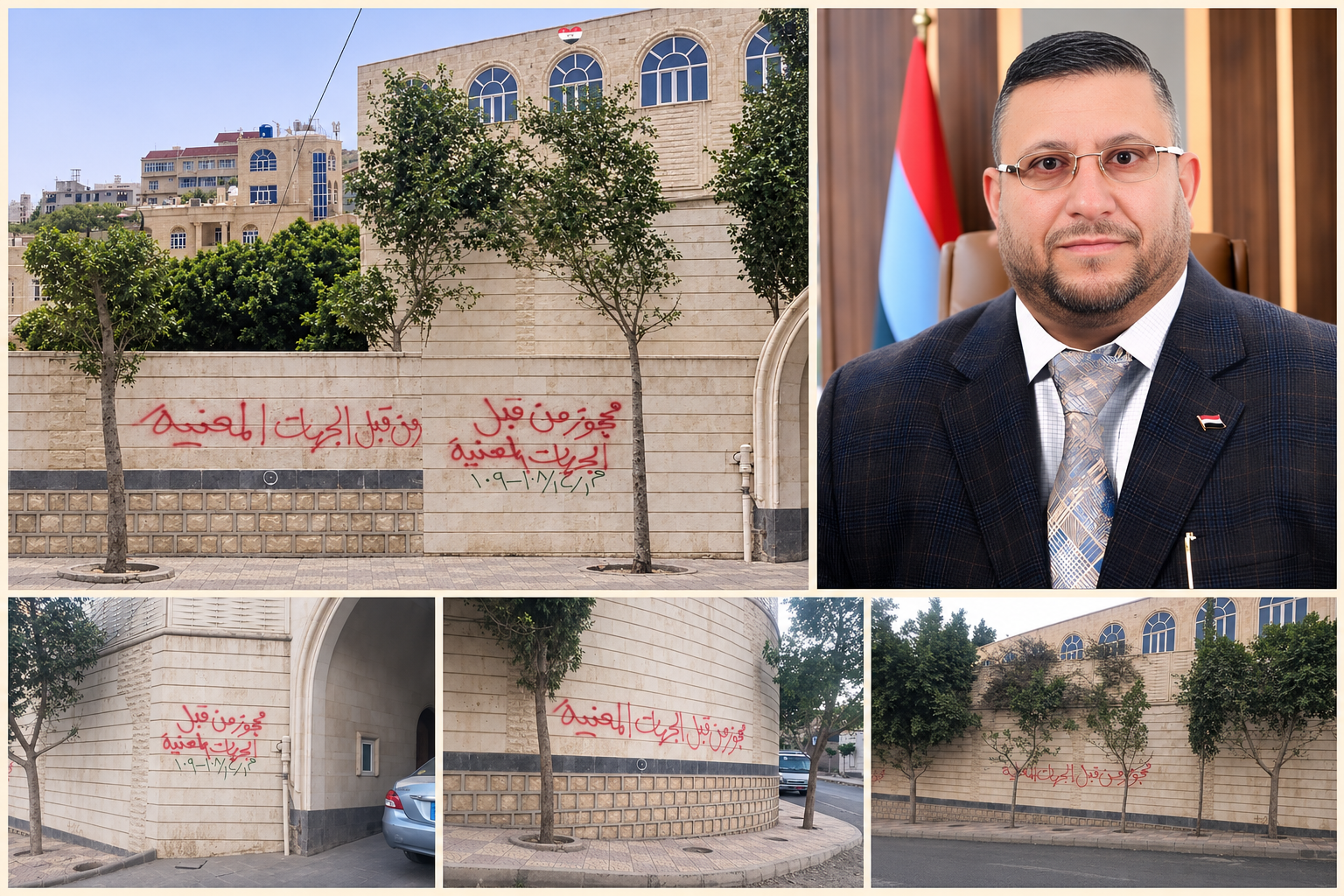
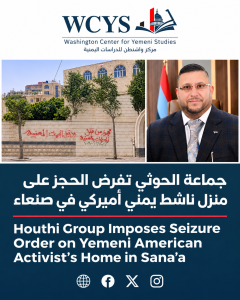
The Iran-backed Houthi group placed the home of Yemeni American activist Naji Mohammed al-Qartahi under precautionary seizure in Sana’a, which it has controlled since 2014.
Al-Qartahi, who lives in the United States, said the move came in response to his political and media positions opposing the militia and his support for Yemen’s internationally recognized government.
The incident drew widespread reactions from Yemeni activists on social media, who shared photos of the home with the words “Seized by the relevant authorities (Houthi)” written on its exterior walls.
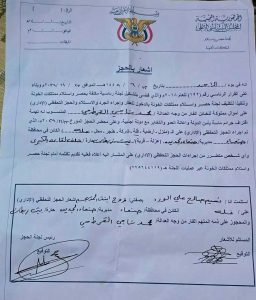
According to a document reviewed by the Washington Center for Yemeni Studies, the administrative seizure notice was issued on November 23, 2026, by a body called the “Committee for Inventorying and Taking Possession of Traitors’ Property,” which operates under the Houthis’ Supreme Political Council.
Al-Qartahi told Independent Arabia that the document accused him of “undermining state security, aiding the enemy and colluding with a foreign state.” He described the accusations as “ready-made political charges.”
Al-Qartahi, who serves as an adviser to Ibb Governorate in central Yemen on expatriate affairs, said he built the home before the war with earnings from years of work abroad and lived in it with his family for years.
He added in his interview with the newspaper, “They are trying to suppress my stance by confiscating my property, but while they can seize the house, they will not be able to silence my voice or break my will.”
Fahmi al-Zubairi, director general of the Human Rights Office in the capital, Sana’a, told the newspaper that the seizure of al-Qartahi’s home could send a threatening message to Yemeni expatriates who express their views from abroad.
Tawfiq al-Hamidi, president of SAM Organization for Rights and Liberties, described the move as an extension of the militia’s policy of intimidating its opponents inside and outside Yemen.
The case comes amid seizures and confiscations affecting the property of hundreds of Yemenis opposed to the Houthis, including politicians, activists, media professionals, military personnel, educators and community leaders.